
Sound Map: David Bowie, Place, and the Art of Becoming
David Bowie’s influence cannot be contained by a single album, decade, or city. His work moved through places the same way it moved through people, shaping identity, sound, and self-expression along the way. This Sound Map is a tribute to Bowie through the locations that mattered most. From London, where his story began and continues to be preserved, to Berlin and New York, where reinvention and belonging took on new meaning. It explores not just where Bowie lived and performed, but how those places absorbed his presence and still echo with it today. Alongside the music, this post introduces a David Bowie–inspired London walking experience I am building as a future hosted group journey. It is designed for travelers who want to experience music as memory and movement, not just history. This is not about sightseeing. It is about standing where something changed and letting the art meet the place.
Sounds Like Travel- Heather Somerville
1/10/20264 min read
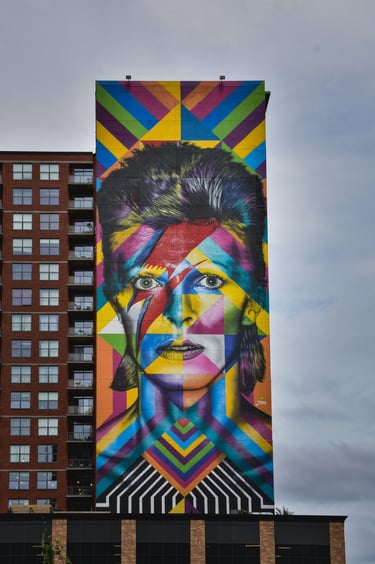
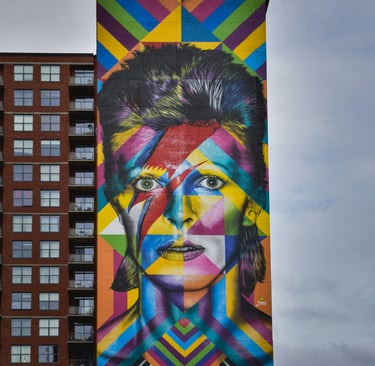
David Bowie’s influence didn’t belong to a single decade, genre, or place. It moved. It shifted. It evolved. And in many ways, it taught us that transformation itself could be a destination.
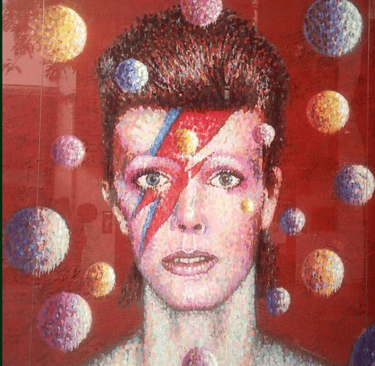
Bowie didn’t just write songs. He created worlds. Each era felt anchored to a place, a moment in time, and a version of himself that gave others permission to explore who they might become next. Ziggy Stardust. The Thin White Duke. Berlin Bowie. New York Bowie. These weren’t costumes. They were chapters.
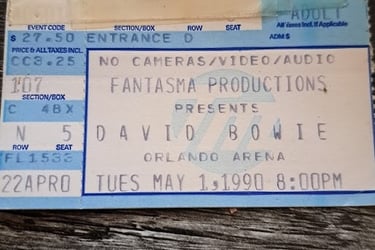
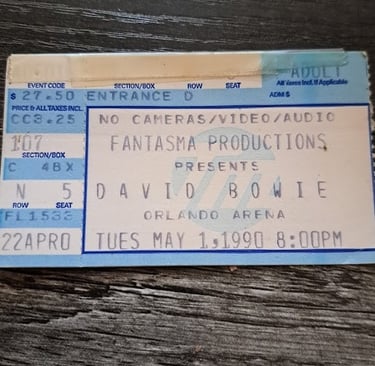
Some of my strongest music memories are tied to geography, and Bowie is no exception. I saw him on the Sound + Vision Tour in Orlando on May 1, 1990, and even then, it felt like more than a concert. It was deliberate. Controlled. Emotional without being indulgent. The kind of performance that stays with you, not because it was loud, but because it was intentional.
That intentionality followed him everywhere.
London shaped Bowie’s beginnings, from Brixton to Soho to the now-iconic doorway on Heddon Street where Ziggy Stardust stood frozen in time. Berlin offered him anonymity, healing, and reinvention. Living near the Wall, Bowie absorbed the tension of a divided city and turned it into music that still feels urgent today. When he performed in West Berlin in 1987, the sound carried across the Wall to listeners in the East, an unintentional but powerful reminder that art does not recognize borders. In 1989, he returned to perform again, this time in a city newly reunited.
New York became home later in life. Soho gave him privacy, community, and a sense of groundedness that balanced the myth. It’s where he lived, created, and quietly built a life centered around love and family.
This Sound Map follows Bowie through those places and moments, but it also looks forward.
Later this year, I’ll be in London, walking the streets that shaped his early work and visiting the David Bowie Centre at the V&A East Storehouse, where thousands of artifacts from his life and career now live. Handwritten lyrics, costumes, set designs, and creative fragments preserved not as relics, but as evidence of a life lived deliberately.
I’ve also mapped out a David Bowie–inspired London walking route, one that connects Brixton, Soho, Denmark Street, Heddon Street, Beckenham, and the V&A. It’s not about rushing from stop to stop. It’s about standing where something mattered and letting the music meet the place.
Bowie’s influence extended beyond music. For many of us, he arrived first through film. Labyrinth was a gateway, a moment of awe at an age when you don’t yet have the language for why someone feels important. The Hunger cemented his place in goth culture, showing that darkness could be elegant and controlled. The Man Who Fell to Earth mirrored what so many fans felt: the experience of being other, of observing the world from just slightly outside it.
His final album, Blackstar, released just days before his death, was a goodbye disguised as art. Created while he was quietly living with cancer, it was a gift left for his fans without explanation, only trust. When he died in January 2016, it felt like the beginning of a wave of loss that reshaped music forever. The world has not sounded the same since.
And yet, Bowie’s legacy is not rooted in loss. It’s rooted in permission.
Permission to explore identity.
Permission to reject binaries.
Permission to be fluid, expressive, and unapologetically yourself.
For the LGBT+ community especially, Bowie wasn’t just admired. He was vital. His openness, his gender fluidity, and his refusal to be contained offered visibility at a time when it was rare and risky. He showed that self-expression could be both radical and beautiful.
This Sound Map is a tribute, but it’s also an invitation.
If you’ve ever wanted to experience music not just as sound, but as place, memory, and movement, I would love to help you build a trip inspired by Bowie’s legacy. Whether that’s walking London with intention, standing where history shifted, or creating a journey rooted in the artists who shaped you, this is the kind of travel that stays with you.
Some artists leave behind albums.
Others leave behind a way of seeing the world.
David Bowie did both.
If music has ever shaped the way you travel, or if an artist’s story feels tied to your own, I would love to help you build a journey inspired by that connection. Whether it is walking London through Bowie’s legacy, designing a music-centered itinerary, or planning a future hosted experience rooted in sound and place, this is the kind of travel I specialize in. Reach out when you are ready. Some trips are about where you go. Others are about why it matters.
Check out the David Bowie tour I plan to do in August.
If you loved this post, check out where I am headed for my 52nd birthday in 2026.
Ready to turn your favorite band's story into your next adventure? Let's plan your music-inspired trip!
Get in Touch
720-949-5409
Heather@SoundsLikeTravel.com
© 2026. All rights reserved.
Ready to Record Your Soundtrack?
Join My Mailing List
Sounds Like Travel, LLC
A WorldVia Independent Agency